In a world filled with constant decisions, our character is often revealed not by the biggest moments, but by the countless small choices we make every day. Whether we're leading a business, serving our community, or navigating our personal relationships, having a clear ethical compass can help us build trust, strengthen relationships, and create lasting impact.
For more than 90 years, Rotarians around the world have looked to one simple yet powerful framework: The Four-Way Test. Originally created to help transform a struggling business, its timeless principles of truth, fairness, goodwill, and mutual benefit have inspired generations of leaders to make decisions with integrity. Its enduring strength lies in its simplicity. The Four-Way Test can guide everything from a conversation with a neighbor to a difficult business decision, challenging us to pause, reflect, and choose the path that benefits both ourselves and those around us.
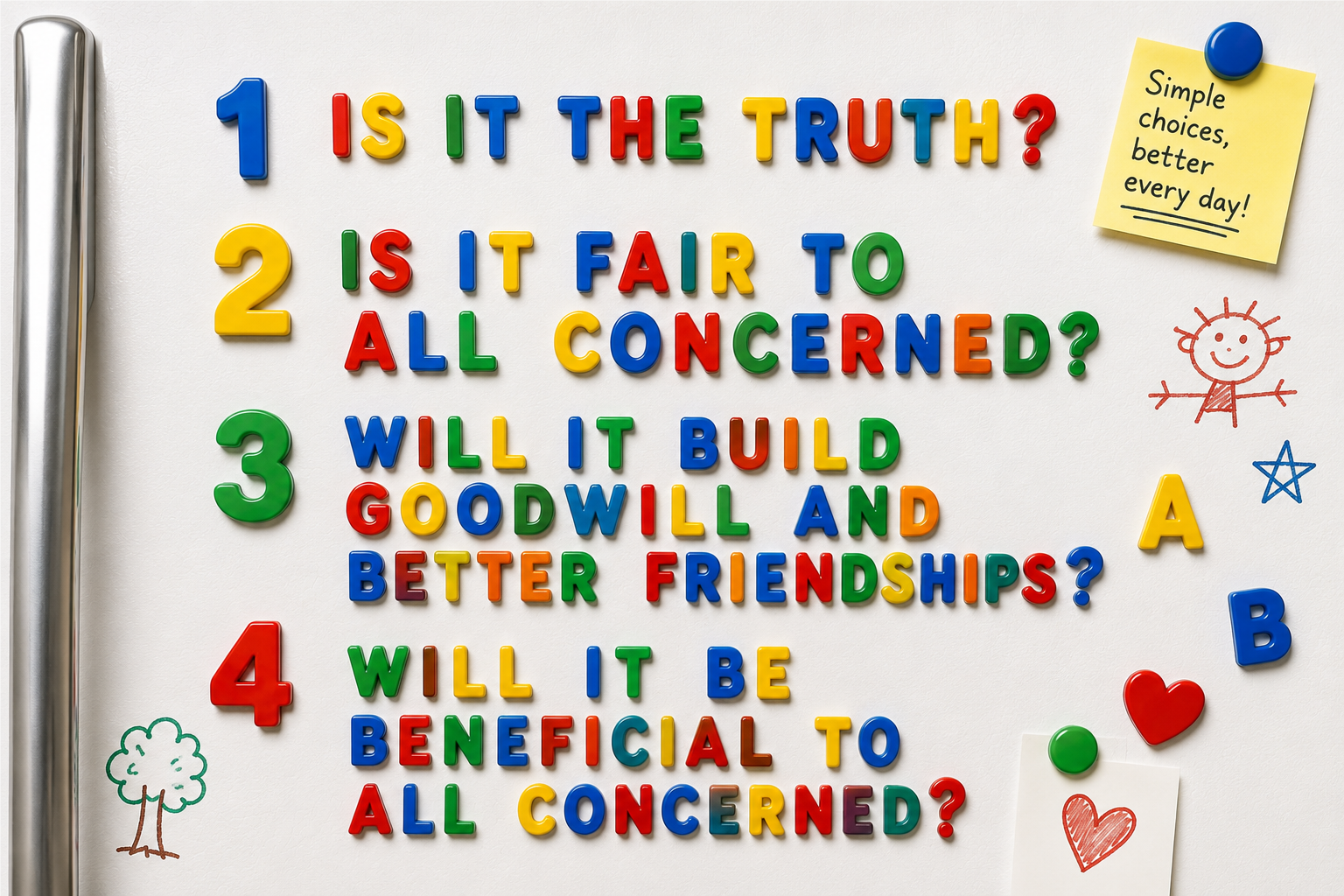
The Four-Way Test
Before speaking or acting, ask yourself:
- Is it the Truth?
- Is it Fair to all concerned?
- Will it build Goodwill and Better Friendships?
- Will it be Beneficial to all concerned?
These four questions encourage thoughtful decision-making and remind us that ethics involve more than simply following rules. They involve considering how our choices affect others.
Where Did the Four-Way Test Come From?
The Four-Way Test was created in 1932 by Herbert J. Taylor, a businessman who was asked to lead a struggling manufacturing company during the Great Depression.
Rather than focusing solely on profits, Taylor developed a short ethical test to guide every business decision and employee interaction. He believed that lasting success required integrity, fairness, and trust.
The approach proved remarkably successful. The company recovered, and decades later Taylor shared the Four-Way Test with Rotary. It was adopted by Rotary International and has since become one of the organization's defining ethical principles.
Applying the Four-Way Test
One of the reasons the Four-Way Test has endured is its versatility.
In Business
Before launching a marketing campaign or negotiating a contract, ask:
- Are the claims accurate?
- Are customers being treated fairly?
- Will this strengthen long-term relationships?
- Will everyone involved benefit?
Businesses that consistently answer "yes" often build stronger reputations and more loyal customers.
In Personal Relationships
Whether resolving conflict with a family member or talking with a friend, the Four-Way Test encourages honesty balanced with kindness and fairness.
It reminds us that being truthful should also be accompanied by respect and a desire to strengthen relationships whenever possible.
In Community Service
For organizations like Rotary, every service project can be viewed through the lens of the Four-Way Test:
- Is the project based on genuine community needs?
- Is it fair and inclusive?
- Will it strengthen relationships within the community?
- Will it create lasting positive impact?
These questions help ensure that service is meaningful and sustainable.
Why the Four-Way Test Still Matters
Today's world is filled with instant communication and rapid decision-making. Social media, email, and online discussions allow information to spread in seconds.
The Four-Way Test encourages us to pause before responding.
Instead of asking, "Can I say this?" it asks, "Should I say this?"
Instead of asking, "Will this help me?" it asks, "Will this benefit everyone involved?"
Those small shifts in perspective can lead to stronger organizations, healthier communities, and better relationships.
More Than Four Questions
The Four-Way Test is not a legal code or a checklist that guarantees perfect decisions. Rather, it is a mindset. It encourages integrity, empathy, and responsibility.
Many ethical situations involve competing interests or difficult tradeoffs. Even when people disagree on the best course of action, asking these four questions can promote more respectful conversations and better-informed decisions.
A Timeless Standard
For generations, Rotarians have used the Four-Way Test as a guide for leadership, business, and service. Its continued relevance lies in its simplicity.
Whether you're leading a company, serving on a nonprofit board, volunteering in your community, or making everyday decisions, these four questions remain remarkably practical:
- Is it the Truth?
- Is it Fair to all concerned?
- Will it build Goodwill and Better Friendships?
- Will it be Beneficial to all concerned?
In a complex world, sometimes the simplest principles are the ones that endure. The Four-Way Test continues to remind us that integrity isn't just about making the right decision. It is about making decisions that strengthen trust, respect others, and leave our communities better than we found them.